Ovary-Acting,
Directed by Ida Melum,
Starring (voices of) Snnøve Karlsen, Sofia Oxenham
The Annie award-winning (for the clever Night of the Living Dread) Norwegian director Ida Melum returns with a superb short, stop-animated film, Ovary-Acting. Eva (Snnøve Karlsen) is a thirty-something woman, feeling trapped at her sister’s baby shower, surrounded by women, mostly mothers, all cooing over babies, and all pushing her as to when she is going to become a mum, with even granny reminding her time is ticking away. Eva is less than convinced – she’s not against the idea, she’s just not sure yet if motherhood is what she wants, or at least not yet, and why is there all this pressure to not only become a mother, but do it now, now now? Is that all she has to choose from? None of the others seem to even consider other options.
Feeling stressed out, her stomach starts to heave, so she makes a run for the toilet, but while in there, her stomach suddenly inflates, making her look as if she is pregnant, and it feels like some sudden, unnatural birth is pushing out of her. And in a way it is, because when it is over she looks up to find her own reproductive system (albeit a cute, cuddly version! This isn’t Cronenberg, after all!) waving hello to her, and tell her to call her “Ovey” (Sofia Oxenham). Unsurprisingly, Ovey is rather fixated on the idea of motherhood too, so now, in addition to her family and friends, Eva finds her own body is at odds with her thoughts and wishes…
As the short film progresses, the two go from arguing to starting to talk a bit more, and while there isn’t a hundred percent agreement, they both start to see each other’s points, and realise that each person’s life choices can vary, they don’t have to conform just to one expected role, they have the right to choose what to do (in fact at one point, a now more enlightened Ovey tells granny to back off, because “our body, our decision!”).
All of this is presented in a really lovely, expressive stop-motion approach of animation, Eva and Ovey with large, almost button-like eyes, with knitted wool hair that gives everything a soft, almost huggable look to it. While it uses a lot of humour and charm (and even song!), Ovary-Acting also contains a potent social commentary on the roles women are expected to fulfil in society (even by other women), the role of motherhood and reproduction, which comes at a time when many women are grappling with those very concerns and juggling the idea of parenthood with career or other wishes and desires, to say nothing of the alarming increase on the rights of women to police their own bodies, while the idea of our own bodies not being in tune with our inner selves is one that anyone, male or female, can empathise with.
Ovary-Acting won the Best Short Animation Grand Prize at Rhode Island International Film Festival, and has been travelling the international film festival circuit, including the prestigious Annecy animation festival, and has qualified for consideration at the 2026 Academy Awards. You can follow Ida’s work on her official site here.
The Pearl Comb,
Directed by Ali Cook,
Starring Beatie Edney, Clara Paget, Ali Cook, Simon Armstrong
Writer, director and actor Ali Cook’s intriguing short film arrives with a most-impressive list of awards garnered at forty international film festivals, including the Méliès d’Argent, as well as qualifying for the 2026 Academy Awards. Set in 1893, on the rugged coastline of the West Country, we see a middle-aged lady, Betty Lutey (Highlander’s Beatie Edney), fussing nervously with her hair and clothing as she awaits a visitor at her remote, coastal cottage.
It transpires her visitor is a young man, a doctor, who also happens to be related to her. Betty, it appears, has acquired something of a local reputation as a folk-healer, the sort of thing not unknown in rural areas of the period, and which would likely have remained just a local story, until it is widely reported that she cured a young lad of tuberculosis. The medical establishment (which in Victorian England means a lot of influential, wealthy, white, middle and upper class men, with, let us say, a pretty guarded interest in being the gatekeepers in regards to curing people), have sent Doctor Gregory Lutey (Ali Cook) to investigate.
The tale that Beatie spins is a fantastical one – she claims she didn’t so much cure the case of tuberculosis, at least not in the normal medical sense, she “healed” it, using her gift, which in turn was a gift from her late husband, Lutey (Simon Armstrong). Upright, Victorian medical man that he is, Gregory is rather sceptical of this claim. Betty recounts to him a tale of her late husband, how Lutey had gone foraging for medicinal plants but not come home one evening. Assuming he was drunk on local home-brew, she tracks him down a day later, sleeping in a barn, surrounded by bottles, but claiming not to have touched a drop. Instead he seems badly shaken, and recounts an incredible tale to his disbelieving wife.
Old Lutey tells her of hearing a strange singing from the rocky shoreline as he was foraging, and on following the sound finds the remarkable sight of a mermaid (Clara Paget suitably ethereal), sitting by a rock pool, fish tail and all. After being initially startled by the appearance of a human, the mermaid begins to speak to him, and then requests his help, offering gifts and wishes in return, such a riches, which she assumes all men want, but Lutey is happy to simply help her and doesn’t care about vast wealth. In fact the only thing that he can think of he’d like as a wish, is the ability to heal people of illness, especially his wife.
Of course, as any of us know, offers of services and wishes from any residents of the Otherworld should always be taken with caution – they always come attached with terms, not all of which are good for you. And that’s assuming he’s telling the truth – Betty is, understandably, not convinced, until he produces the pearl comb from the mermaid’s hair and demonstrates his healing ability.
At this point, Gregory is not exactly taken with this story – a fine yarn for the grandchildren, of course, but not a serious explanation for her supposed healing abilities that he, as a doctor, chosen to investigate this case, can accept seriously, even though he is related to her. In fact he’s quite dismissive of her, and of women in general, with all the scorn of a patriarchal Victorian man, sure of his place in the world and acknowledging nothing that science cannot explain (and certainly sure that there are strict places for what women can and cannot do).
While interesting, and very well-made, this could easily have moved into a predictable third act, but instead – well, no spoilers, of course, but suffice to say Cook brought together a satisfying conclusion, drawing on aspects of science, of folklore, and drawing inspiration from real history (such as the early women medical pioneers who had to fight to be recognised). The Pearl Comb packs a whole lot into such a short run time – it sets up its premise swiftly but assuredly, introduces its characters and then mixes elements of drama, horror and fantasy into a piece with some social commentary thrown in too, all in about twenty minutes – impressive.
I always find the live action and the animated short film section of the festival to be a fascinating one. The short work is often where you find new or different talent, starting to spread their wings, and that’s something any art form needs to encourage (I also find it heartening that that film festival has a number of these mostly-new film-makers present to talk about their works, which are often very personal). All of the works in this strand were in competition for The Thelma Schoonmaker Prize for Short Filmmaking Excellence, named for the acclaimed, Oscar and BATA winning editor, renown for her collaborations with Martin Scorsese. As with any collection of short works, it’s a varied mixture. Some will connect more with one viewer, others with a different viewer, but regardless of who wins, hopefully exposure at this sort of festival event helps boost the creator’s signal and get them noticed in the wider media sphere (and perhaps even help in opening other doors further down the line, always a constant struggle for any artist in any artform).
There was a pleasing diversity on offer here – one audience member who stood at the end of the Q&A with the creators summed it up nicely when he thanked them for making us cry and laugh. We moved from friends creating music and celebrating a birthday (Argentinian entry Shoal) to a special anniversary for an elderly couple, the wife in the grips of dementia, her erratic memories bursting forth in the form of animation created using napkins (Wilma Smith’s The Jubilee), to a monochrome homage to the golden age of silver screen monster movies in a world where werewolves are real (Manny Wolfe), to exploring family memories and exploding houses (Liberty Smith’s My Exploding House) , father and son relationships (My Dad and the Volcano by Scottish creator Gavin Reid, who, it turned out, once worked in the Cameo Cinema where the films were being shown, and Lisa Clarkson’s Paternal Advice, adapted from a story by noted Scots author Janice Galloway), mother and daughter relationships and living on the breadline (Jamie Di Spirito’s Homework), and gender identity (Max Olson’s Nico). It really was a satisfying and diverse selection, from home and abroad. There isn’t time or space to cover each entry – I thought they were all strong in their own ways, but I can’t cover everything, so here are just a few thoughts on some that particularly touched me:
Trevor Neuhof’s Manny Wolfe tickled me in all the right ways – as you may guess from the title, this was the werewolf short film. Lovingly shot in black and white, with that silvery sheen characteristic of those 1940s and 50s horror films, it is also poking gentle fun at Tinsel Town (Manny works as a waiter, but explains he is an actor – a director dining in his restaurant just nods wearily, you and every other waiter in this town, kid). In this world werewolves are real, but they are just people, not bloodthirsty monsters, and while the horror flicks may seem made for him, Manny keeps losing out at auditions because he wants to be a serious actor, not just a howling wolfman. It’s funny and touching, both to fans of classic horror, and also to the struggle everyone who has worked in Hollywood has gone through to make it, that anyone who loves the film medium will be aware of.
Max Olson’s Nico was a beautifully crafted piece, following a young trans man (Rene Leech); we see them shaving off their longer hair to a buzz cut, breasts bound, a gentleman’s overcoat, but the disappointment on their face when a nightclub doorman refers to them as a woman, and realising that these changes haven’t altered the way many others see them. The actor plays this with such vulnerability and quietness, head always down, not making eye contact, usually on their own in a dark city, alone even in the crowd of the dance floor of the club.
There’s such a fragile beauty to it and vulnerability of someone trying to be who they want to be that you almost want to hug them and tell them if will be alright. The elderly widow in the next apartment sees them in the man’s coat and tells them they look like her late husband, leading to an incredibly touching shared moment between two souls struggling with where life has taken them; ultimately this beautiful short film is about the fact each of us has our own pains and needs, and it is only those precious connections to one another than can really anchor us.
Wilma Smith’s The Jubilee was a mix of live-action and animation, most of the latter created, hand-drawn on table napkins and tissues (the objects themselves, rather cleverly, can become animated too, moving, rolling up to evoke emotions of loss, grief, anger and fear). On those napkins we see a woman, then a dashing man in a suit, who she at first thinks is her father, before realising it is her beloved husband. A cacophony of voices can be heard in the background, commenting about her condition, about her not having one of her good days, and to any of us (far too damned many of us) who have had loved ones slowly consumed by it, we will recognise this quickly as someone with dementia.
Smith uses this simple animation medium (all done in her garden shed, cold in winter, roasting in summer) to great emotional effect; the feelings of disorientation, of knowing something is wrong, something is missing, but not knowing what or why, and the panic it brings, then the sudden bursts of memories that do remain, suddenly vivid for a brief spell. The final moments are live action, a family gathering for a special wedding anniversary, the live footage the real world we see, the animation the interior life of a mind and memory failing itself and trying to find the thread through an impossible labyrinth.
I think the thing that struck me with all of the works here isn’t just how well-crafted they were, it is also how wonderfully personal they clearly are to the filmmakers. Yes, of course, you can have a lot of personal elements in a feature film as a writer, director, actor, but I think perhaps with the short form it is more concentrated, you can feel the emotion in it, and that always enriches your viewing experience. From the short Q&A with the creators after the screening in the Cameo Cinema, it seemed even clearer that each of them had indeed brought a project that was very dear to them emotionally, and for my money that’s a good thing – any artistic endeavour that doesn’t elicit an empathic or sympathetic emotional response isn’t working for me, and these all touched me in different ways.
Edinburgh International Film Festival – Animated Shorts
The Edinburgh International Film Festival was much shorter than usual this year – given last autumn we thought we had lost it along with the Edinburgh Filmhouse when the charity running both went into administration (see our report here) though, I was just grateful the world’s longest, continually running film festival was still going. We didn’t have the annual McLaren Animation Awards this year, but I was relieved to see that the EIFF programmers still made space for the animated short films, with a mix of familiar faces and new talent, with a dozen films, taking in a diverse array of subjects and styles, from hand-drawn to using found objects, stop-motion, even fragments of vinyl album sleeves to create their worlds.
I will hold my hand up here and admit my bias – as readers of our previous years of EIFF coverage will have gathered, the short animation strand is pretty much my favourite art of the film festival. In one screening it encapsulates – at least for me – what these festival should do: expose the viewer to a mixture of established and emerging talent, give them that important showcase, and take in a variety of styles and subjects. Isn’t that part of what we want at a film festival? That chance to explore works we might not otherwise see?
Jenny Jokela’s Sweet Like Lemons, a play on the old “if life gives you lemons, make lemonade” phrase, used a colourful, hand-drawn style to explore issues of toxic relationships, and trying to extricate yourself from them. We see hands trying to write an email, constantly starting the message, then deleting it, starting again, and again, because she’s trying to find the determination to break free from a cycle of behaviour and find herself. The artwork veers from colourful and beautiful to the suddenly threatening, mirroring such controlling relationships, and felt very from the heart.
Some of the other works were also clearly drawing (sometimes literally) on personal experiences, using the animation medium to explore their own emotional history and experiences, articulate them, perhaps learn and grow beyond them, or at least have some closure and ownership over those issues, instead of letting those issues own them (not to mention sharing with others, some of whom may have experienced similar, and may gain recognition and strength from the sharing, never a bad thing).
On that score, I thought Holly Summerson’s Living With It, and The Perpetrators by Richard Squires both used animation as a way to explore their own lives and struggles. In Living With It, another traditionally, hand-drawn animated work, Summerson takes the reality TV show idea of the home makeover, except in her case her home and world are run down and in need of an uplift because she lives with a chronic illness, manifested as the character Bug. It’s a brief but emotionally effective glimpse into a life too many have to cope with.
Perpetrators mixed live action footage with animation, exploring how it was to grow up as a gay man in the hostile environment of the 1980s. The framing device is using changing medical and psychological definitions of homosexuality (still on the books as a mental illness until just a few decades ago). The pain and shame of having to be hidden, not to be able to declare who you are to friends or even close family, is palpable, the institutional nature of the bigotry shameful to modern eyes (consider how similar tropes are deployed today in the debate around trans rights). But Squires also deploys a lot of humour here, using tropes from the much-loved Scooby Doo cartoons to inform his animation. I suspect that streak of humour was, for him, as for many of us, part of how he coped (what would we do without that sense of humour? How much darker would our lives be?).
Tanya J Scott’s The Wolf of Custer was a beautiful piece, exploring the power of folklore and myth, as a hunter, reminiscent of Quint in Jaws, listens to the people of a small town tell tales of a giant wolf that can devour entire bisons (the smoke and flame of a fire and the shadows in the room all morph into flowing, dream-like images of the magical wolf as they tell their tales). Arrogantly he declares where would we be if we believed such native folklore nonsense, and that he will set out to kill their wolf. As you may imagine, as his journey through the vast wilderness progresses, and he catches glimpses of the wolf, then images of it carved and painted into the rocks of the very land, he slowly comes to realise and respect why we have such creatures in our stories, why they are important to us.
Jordan Antonowicz-Behnan’s A Taste For Music dealt with living with a seriously ill loved one, in this case his father. It captures that frustration at seeing them being weakened and unable to do things they want, and is also quite honest about the anger and resentment that comes along with this as it grinds on (many of us will have been there, with the best will in the world there’s a moment where you just become so angry at the situation, the disease, even the person). Through it though is a shared love of music, drawing – quite literally here, the animator drew on record sleeves – on his father’s extensive vinyl collection as a way of connecting, something the illness could still allow him to do, while the use of record sleeves gives the visuals a distinctive flair.
I was also delighted to see BAFTA-winning Ainslie Henderson return. I’ve seen Henderson several times at the McLaren Animation strand at the EIFF over the years – his film A Cat Named Dom won last year’s McLaren gong at the festival (see our report from the 2022 EIFF here on LFF), and am always looking forward to any new work. Shackle is a stop-motion piece (I love all animation, but have an especially soft spot for stop-motion work), with a couple of small woodland creatures, taking everyday forest objects such as apples and pine cones, then making art and music with them, while a more frightening version of these endearing creatures lurks in the dark version of the forest, looking on greedily and coveting what they have.
I don’t really have time to dive into every film screened during the Animated Shorts, but these are some of the ones that especially caught my eye. Again I am grateful the animators get a chance to show these in a cinema setting, with an audience, and talk about their works – we used to have the excellent Four Mations on Channel 4, and BBC2 used to do late night animation strands, years ago, something that seems to have vanished from media schedules these days, despite the phttps://www.liveforfilm.com/roliferation of more channels and the fact we’re still seeing new and established talents creating new, interesting works, but the main broadcasters seem to ignore them, which, I think, makes the film festivals all the more important as a chance to wave the flag for this time-consuming and inventive form of film-making.
My first day at the 2022 edition of the world’s longest continually running film festival (the EIFF now in its 75th year), and I started off with three screenings back to back, all in the animation strand. The first two showings were the two halves of the annual McLaren Animation Awards nominees (named in honour of acclaimed Scottish animation pioneer, Norman McLaren). We didn’t have them at the much-reduced EIFF last summer, so it was especially nice to see them return for the first time since 2019 in the Pre-Covid World. The McLarens are always one of my personal favourite segments of the EIFF – they showcase a pretty diverse array of (often very young) talent, tackling different subjects, using very different styles and animation techniques. I often see some of them crop up months later in shortlists for major awards like BAFTA or even our old chum, Oscar, so it’s a great showcase for talented animators, especially as many of the creators are present and can talk to the festival audiences about their work.
As with any collection of short pieces, there are always some that appeal to a viewer more than others, and I will hold up my hand right here and say that yes, of course that is very subjective and individual – another viewer might prefer a totally different set from each of the two McLaren sections. So with that caveat in mind, some of this year’s short animations that I particularly enjoyed! Emma Calder’s Beware of Trains was a compelling examination of anxiety and psychological breakdown, often through disturbed dream imagery, with elements of sexual and violent motifs, while an interesting technique which looked as if the eyes and surrounding area of skin from a real face were inserted onto the animated character’s face produced an unusual look, which I found simultaneously interesting but also somehow quite disturbing (which worked well for the subject matter).
Linda McCarthy’s Bob Bobbin and the Christmas Stocking was totally different, with a delightful set of stop-motion characters in a country house, including a masked butler and a posh cad forced to learn a lesson about Santa, with some lovely little characterisations throughout. Simon P Biggs brought us a beautifully done piece with CG animation, Burry Man, riffing on the eponymous old myth (still celebrated in some parts of the country – South Queensferry, just on the edge of Edinburgh, by the mighty Forth Bridge, celebrated the Burry Man event just the week or so before the festival). It was a beautiful interpretation of an old myth, and one scene in a secret lair with a scary figure seemed like a nod to Pan’s Labyrinth (also I hadn’t realised I’d seen his work before – he exhibited Steampunk short Widdershins a few years back, which won a BAFTA). Cat Bruce’s Dùsgadh also riffed on Scottish folklore, following a hunter who challenges a beast but is cursed at the moment of victory, with the art often done in a silhouette style, with overtones of Lotte Reiniger, quite beautifully done, moving work.
Alex Widdowson’s Drawing on Autism used interviews with an autistic man to explore how neurodiversity is represented, using several different techniques as the animator ponders if each approach is the right or wrong one, if they are doing right by their interview subject, while Andrew Kötting’s Disease and Disorderly also focuses on neurodiversity, with animators Glenn Whiting and Isabel Skinner working with him to bring his daughter, the neurodiverse artist Eden Kötting’s work to life, exploring her unique view of her life and world. It was refreshing to see this subject being spotlighted, and treated with obvious love and respect.
Mai Vu’s Spring Roll Dream looked at the push and pull of family and cultural ties, with a single mother of Vietnamese heritage creating a life for her and her son in America, contrasting with her elderly father who is trying to use elements like traditional cooking to bond with his grandson and remind him of his cultural heritage. Ryan Loughran’s Soul Office offered up many chuckles, with a man and woman from Northern Ireland ending up in the titular Soul Office after managing to get themselves killed during a botched ATM robbery, and they can’t move on to the next part of the afterlife until they deal with unfinished earthly business – which in their case is going back to complete the robbery, which devolves into almost Road Runner-esque levels of increasingly crazy fun.
Following the two McLaren screenings we had a feature film from two well-known animators who have shown their work at several previous McClarens, and indeed won the award (and BAFTAs and other gongs), Will Anderson and Ainsley Henderson, with A Cat Called Dom. An experimental sort-of documentary, following how Will reacts to the awful news that his mother has been diagnosed with cancer, and will require serious surgery and treatment. The film mixes family videos, live action footage and, naturally, animated sections, with the eponymous Dom being a cartoon cat on his laptop, who he shares conversations with.
The pair chatted with the festival audience afterwards, telling us how the film took years to come together as they tried various ways of approaching it, and of course the endless struggle to get backing and funding, that great bugbear of all film-makers everywhere. It’s an intriguing mixture of the very emotional (unsurprisingly, given the subject matter) and often self-deprecating humour, while also exploring just how the pair craft their film-work. BBC Scotland had a hand in helping get it made, so it seems that at some point in the future it should get a broadcast date.
I always make a special point of attending the two McLaren short animation strands at the Edinburgh International Film Festival each year. BBC2 and Channel 4 used to have animation seasons, but that’s something that seems to have fallen mostly by the wayside these days (despite each now having multiple digital channels) and the days of a wee short before the feature film in cinemas is long gone, which, for me anyway, makes it more important to support and celebrate when we get to see short animation being highlighted, especially when it is being shown on a cinema screen. We have some remarkable young animation talent in the UK, and this and other festivals are a chance for them to shine, to effectively show their portfolio in order to try and secure more work (be it with an animation house on a film or the bread and butter of music videos, ads etc which help pay the bills) or compete for scarce funding.
Each year the McLarens always impress me with the range of material on offer, both in terms of method (from slick CG animation to traditional hand-drawn or stop-motion work and all sorts in-between), and subject matter (some are funny, some are political, some are biographical, some bring a lump to the throat). This year was no exception. Given the two screenings took in over twenty short works I am not going to go into each and everyone that was shown, but I will pick out some of those that made an impact on me, personally.
Sam Gainsborough’s Facing It was a pretty unusual-looking piece, mixing live action actors with claymation faces overlayed on their heads, producing a strong visual style for the piece. A young man waits for others at a table in a busy pub; he clearly wishes to reach out and be a part of the buzz of vibrant, lively conversation and life goign on all around him, some even invite him to join them, but his crippling shyness halts him, his claymation face morphing, a hand literally growing out of it to clamp around his mouth as he tries to speak to a stranger, while flashbacks show childhood events with his parents which shaped this isolation and nervousness. While most of us don’t suffer from such an extreme I think we have all had moments where we need to interact with strangers or a group and have that anxiety moment before we do. The plasticine animated faces over the live actors works very well, allowing for a range of emotional expression way beyond what even the most facially gifted actor could give; it’s a lovely example of one of those things animation can do so well, using a few simple visual signifiers to show the internal emotions of a character so clearly.
Ian Bruce’s Double Portrait splits the screen into two hand-painted images, changing and coming to life before our eyes, telling the story of a woman, Geraldine, and her first love, of how it all seems so straightforward to them when younger, but how life changed them, parted them, brought them together again. It’s beautifully illustrated with Bruce’s painting, giving a warm feel as we move through their lives across the decades. Jonathan Hodgson’s Roughhouse, a traditionally-drawn animation, tells of a group of pals, friends since childhood, marked by a moment of rough play with a pet that ended badly, later growing up, going away to college, meeting a new flat-mate and settling into student life (complete with messy flat). It’s actually quite a brave film, I think – Hodgson gives us characters who are often not very likeable, and the roughest of them all, the one who never pitches in for the rent but can always pay for drink, seems the least likeable of the group, but Hodgson carefully shows us that under laddish, unthinking jokes and “banter” and bravado there are feelings and even the seemingly strongest and toughest can suddenly crack. It’s a good reminder that under it all everyone is human.
Maryam Mohajer’s Red Dress, No Straps draws on some of her Iranian background, with a very young girl living during the era of the Iranian revolution and the awful Iran-Iraq war which lead to scenes reminiscent of the First World War. At home with her grandparents, grandma indulging her beloved grand-daughter by making her a dress like her favourite US pop star seen in a magazine (that has to be hidden from the religious authorities who are busy teaching her and other kids to shout “death to America” each day at school). A red dress, strapless. Meanwhile they have to worry about bombing raids on civilian targets during the war, but she tells us Saddam is not very good at this and they are all okay. It’s a lovely, warm piece evoking a strong feeling of family that any of us can identify with, but despite what she says, everything is not okay, and this is a film that left me with a lump in my throat.
Lucia Bulgheroni’s Inanimate proved to be my favourite from all the films shown in both McLaren screenings. I love all form of animation, but I have a special soft spot for traditional stop-motion animation. There’s something for me that is truly magical about knowing that everything you see on the screen there has been built by hand, from the characters and their clothes to the tiny sets, furniture, right down to coffee cups, then, through a painstaking alchemy, enchanted into life, one frame at a time, hours, sometimes days to capture a few brief seconds of movement. In Inanimate Katrine is leading her normal life – work, home, shopping, boyfriend. And then things seem to go wrong, to be disconnected, she is doing one thing and suddenly, woosh, she’s rushed from home and finds herself at work with no in-between, then somewhere else and somewhere else. She panics, is she losing her mind, having blackouts?
And then see starts to see the world around her differently, it starts to seem unreal to her, and soon so do the people and then, most terrifyingly, her own body. Her skin looks fake, it peels back and she sees the metal armature of a stop-motion puppet below. She isn’t real. Around her she is suddenly aware of huge figure, flickering at a speed that leaves them almost invisible, changing things around her world and other little worlds nearby. She’s a puppet who has somehow become aware, seen behind the scenes of her little reality, seen the strings and the puppet master. It’s both a story about how we all invent our own little realities to cope, to understand, to get through life, but are often aware there is more, just beyond the edge of our vision, and at the same time it is an ode to the laborious art of stop-motion, those long, long hours to create tiny moments of life in inanimate objects are, from her point of view, fleetingly fast.
It reminded me of Tom Moody at the McLarens a couple of years back, talking about working with found objects which he turns into characters, then brings to life with stop-motion. Tom he talked about the sadness which went with the joy of animation, joy at making something, but the sadness that after all the care to bring these creations to life they only had those few, brief moments of that life, then they would go on the shelves with older creations, never to move again, a rapid, Mayfly experience of the world. I suppose there’s probably a lesson about life in there, somewhere.
Space doesn’t really permit me to go into all the other works, but I must mention Sinem Vardarli and Luca Schenato’s (very long-titled!) The Brave Heart or (The Day we Enabled the Sleepwalking Protocol), which, like the old Numbskulls Brit comic or Pixar’s Inside Out it took us inside the body, with various organs such as the Heart and Brain, carrying out their tasks (or not), in the face of a booze, smoking and fast food blow out (very clever, very funny and rather dirty, especially when this all leads to an emergency “blockage” which I shall not describe here!). Stephanie Hunt’s Marfa took us around an odd wee Texas town, from local bands to local characters and gave a lovely flavour of life in a remote small town.
Ben Steer’s Mamoon had a mother and child, shadow figures projected onto polystyrene buildings, pursued by dark shadows – as the light fades so too do the shadows which it projects, which means doom, and the shadow figure mother desperately tries to save her child, while Daniel Prince’s Invaders uses very polished CG animation to bring to life three tiny flying saucers, exploring a human home on Christmas Eve, the smaller one unsure of his place with the larger two, trying to prove himself. There was a strong 80s vibe to Invaders, I thought, and Prince confirmed this in the subsequent Q&A, noting 80s Spielberg and most notably Batteries Not Included as influences. Simon P Biggs’ Widdershins was a delightful tale of a Steampunk, quasi-Victorian future of clockwork and steam automata making everything so perfect our character can’t stand it anymore, and falls for a daring young woman who challenges the system. I also loved it because “widdershins” is such a lovely word and we rarely get to use it…
In the post-screening Q&As with a number of the animators one of the subjects raised was trying to get funding for short film work, and how much harder it had become. Adding to that, as to many other projects, was the looming spectre of Brexit. The animation director for the festival spoke about manning the British stall at the famous Annecy animation festival and remarked it was “tumbleweed” for them. With so much uncertainty nobody wanted to invest in UK productions or take on distribution. In fact he commented that those from outside Europe were being more actively courted by European partners than the UK team. Jonathan Hodgson told us how he could not get any funding from any UK company or arts organisation, but eventually a French one did agree to help, and he, like others, wondered if that avenue was now being closed to them, a question many in various arts disciplines (and science and business) are asking? This is not the place for a political discussion, of course, but equally it would be remiss not to note the worry of film-makers and others about how opportunities for co-operation, distribution and funding for their future work will be affected, and at the moment none of them have any real answers as to how they will be affected, and I’m sure that is a worry being discussed across the UK film industry.
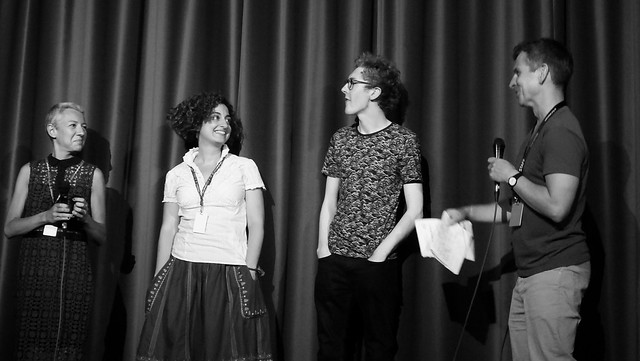
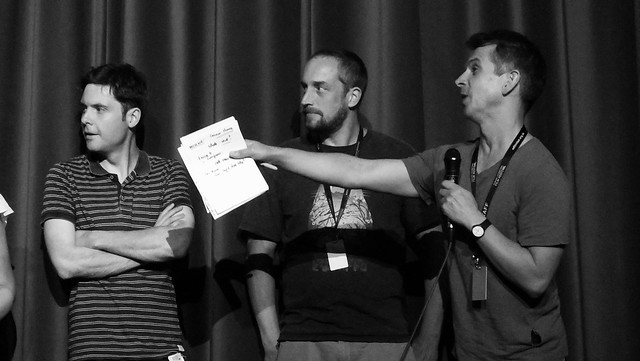
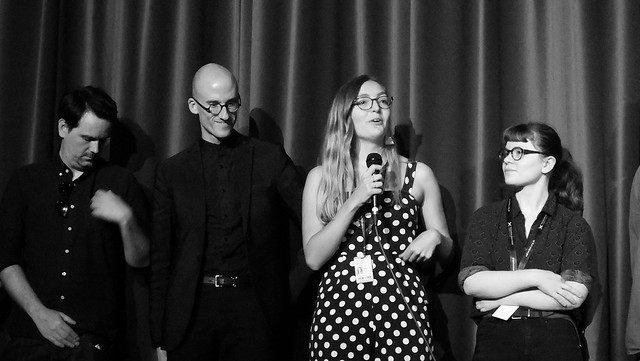
(some of the animators doing Q&A sessions in the Filmhouse, post screening of this year’s McLaren Animation strands at the Edinburgh International Film Festival, pics from my Flickr)
It was another great crop of inventive, often emotional, sometimes funny, sometimes touching short film-making by all sorts of different women and men working in different methods and styles to bring still objects and art into flickering life. Often I will see some of the McLaren animators figure months later in the short animation categories for BAFTA and Oscar, and fingers crossed some from this year’s crop will have that success too. Props again to the film festival for continuing to support the McLarens (named for iconic Scots-Canadian animator Norman McLaren, an alumni of the famous Glasgow School of Art which was in the news for the saddest of reasons recently), because it is a chance for these film-makers to have their work seen by an audience (and it is the audience who comes along to support them who get to vote on the award) and by the wider industry, a chance for them to be noticed by possible future employers and collaborators, and we need that kind of encouragement and celebration of creative work in all levels of our film-making if we still want to have such creators in years to come.
I enjoyed Swift Film’s short but rather lovely Ian Rankin’s Secret Edinburgh, with some terrific, smooth aerial shots going along with narration by Ian talking about some of the off-the-tourist spots of our gorgeous city:
Absolutely loving this – Steven Jefferies has taken the iconic Game of Thrones animated opening sequence and reworked it with Edinburgh landmarks. Brilliant
And he did a making of for a glimpse behind the scenes:
This is just a stunningly beautiful short film from The Avant Garde Diaries team, following freediver William Trubridge into the depths of the sea, no oxygen cylinders, no scuba gear. I’ve had a fascination for this sport since I first saw The Big Blue decades ago (it remains one of my favourite films) and like that film this features some gorgeous underwater cinematography, here presented in a wonderfully crisp, almost ethereal, otherworldly monochrome (more of their videos here):
Vie d’Enfer is a terrific short animated film, where a portly wee demon who clearly loves his work of tormenting the damned gets a bit carried away, overloads the torture machine and blows himself all the way to the opposing realm, where the soon runs amuck. The animation style is great, with a genuine sense of fun and dark humour that will appeal to folk like me who enjoy Edward Gorey and Tim Burton:
Ovo is a very well-made and interesting looking short science fiction film from WeWereMonkeys, directed by Mihai Wilson, following three criminals, survivors of a larger group who crash-landed on an inhospitable world, now starving and fighting among themselves, but their actions and presence on this planet will trigger an unusual event they can’t foresee: