Edinburgh International Film Festival – Mongrel

Edinburgh International Film Festival 2024 – Mongrel
Directed by Wei Liang Chiang and You Qiao Yin,
Starring Atchara Suwan, Hong Yu-hong, Kuo Shu-wei, Lu Yi-ching, Wanlop Rungkumjad

This Taiwanese film arrives at the Edinburgh festival hot from the prestigious Director’s Fortnight at Cannes. Mongrel explores a subject which may be set in Taiwan, but sadly covers a subject which is all too common all around the globe: the trafficking and exploitation of undocumented migrant workers. In this case the gangmasters are in the mountain areas of the country, and using their workers (more like serfs) as care-givers for families who need them, but perhaps can’t afford the official care services, so this black market operation steps in to fill a need (for a price).

As we first meet the group, they are angry at their boss, justifiably so, because they have been working hard for him for two months and seen not a single penny of the money they desperately need to earn to send back home to their families abroad. When not working illegally (and mostly unpaid) they are kept in a secure compound, the euphemistically titled “dormitory”. Being undocumented workers, they have nobody to appeal to for help – employment or safety legislation simply doesn’t cover them, and regardless, even if it did, they dare not go to anyone in authority, because they would be arrested and deported.

It’s a wretched, desperate situation of exploitation, and yet Oom (Wanlop Rungkumjad), although obviously not happy at his situation, retains his sense of compassion – he gets to know the people he has to take care of, especially and older lady and her seriously disabled son. He’s not just going through the motions, he does actually care, despite being forced into this servitude, he’s a good soul and does his best by them, while also trying to mediate between his fellow workers and the boss (who as we see is in turn under a higher boss in the gangs, all running people’s lives like a business).

The film itself is very unusual – there’s not a huge amount of dialogue, particularly not from leading man Oom. Oom keeps most of his thoughts and feelings within, only small changes in expression and body language giving us a clue to what he is feeling; it is telling, perhaps, that the most I heard him speak was to the body of a deceased member of his group. The style too is unusual – some scenes go on for what feels like far too long (right from the start – the first scene is Oom having to clean mess from a bed-ridden client, and the camera stays fixed on the scene for quite some time), until it starts to feel very uncomfortable. The shots are often very static, not moving with the characters but the camera remaining in place as a scene acts out around it, or at other times leaves a character looking directly into the lens, normally a no-no for most film-makers.

And yes, this does create quite a strange feeling – as I said it is uncomfortable, but the more I watched, the more I thought that was exactly the idea, because we should be uncomfortable at these scenes, while the often static choices of camera work make us feel like we are watching someone’s life, more like a documentary than a fictional tale, but where we have a fixed viewpoint that we cannot look away from. Having characters occasionally look directly at the lens reinforces this, especially one scene where the disabled man seems to be looking right at the viewers.

This really will not be for everyone – it is slow, it does not build up the traditional narrative (backstory, main story, character arcs), and deliberately uses camera techniques that also give the viewer a strange and not always pleasant feeling. And yet, if you stick with it, this is a slowly effective and powerful way of highlighting this modern story of international exploitation, more effectively than a more heavy handed drama might.

This review was originally penned for Live For Films

Edinburgh International Film Festival – Raging Grace

Edinburgh International Film Festival – Raging Grace,
Directed by Paris Zarcilla,
Starring Max Eigenmann, Jaden Paige Boadilla, Leanne Best, David Hayman

Joy (Max Eigenmann), is an undocumented Filipino immigrant in the UK, part of the all-but-invisible army of people who often do the most laborious, low-paying, manual work that is so necessary to keep everything in our society running, but with none of the legal safeguards others workers have the right to, ripe for easy exploitation, unable to ask anyone in authority for help. With her young daughter, the eponymous Grace (Jaden Paige Boadilla), she goes from one gig to the next, usually cleaning homes, cooking and tidying for wealthy families.

The pair appear to be living in a storage room in an apartment block, secretly, their domestic life as hidden as their work life, although when some of her rich clients are away on nice trips abroad, they sleep over in their homes, carefully tidying everything before the family returns (leading to some tense “will they get caught” moments early on), while Grace amuses herself by playing practical jokes, like swapping gravy granules for the coffee powder, one of the child’s few outlets for fun.

Behind on her payments to the fixer who arranges for the immigrants to get into the UK for a large fee, she is feeling desperate, when she is offered what seems like the perfect opportunity – housekeeping duties at a large, isolated mansion, while also looking after its terminally ill owner, an elderly gentleman, Mister Garret (the always-excellent David Hayman). Garrett is dying of cancer and is largely comatose – his niece, Katherine (Leanne Best) is taking care of his affairs meantime, and offers Joy not only a large wage, but paid in cash, no questions asked, and free lodgings in the large country house.

Best does an amazing job of showcasing the casual condescension of the very wealthy, upper parts of society towards immigrants like Joy, giving her Katherine that arrogance that clearly thinks “I am a nice, inclusive person” while being anything but (yes, phrases like “you people” will be deployed). Joy, of course, simply has to nod, smile and say “yes, miss” to all of this because Katherine has all the power. Joy is also dismayed to see how Katherine treats her comatose uncle, forcing his daily pills prescription into his mouth, holding his nose to make him swallow while still asleep. This is all further complicated by Katherine not knowing about Grace, who has to hide her presence.

What starts as an interesting drama about vulnerability, exploitation, race, class and privilege starts to morph into more of a thriller and horror, drawing on the Gothic tradition and also the classic Old Dark House, very effectively using both the grand house location, and the small but excellent group of actors. Snooping around secretly, young Grace finds some disturbing, hidden facts about the house and those who have lived in it, and there are hints that perhaps the medicine Katherine is giving to her uncle may not be what she claims. Hayman, when he does waken from his coma, essays an especially fine performance, managing to take us from twinkling-eyed, gentle, loving older uncle figure to radiating menace (a simple scene where he tells Joy not to call him “mister” but “master” is powerful and chilling).

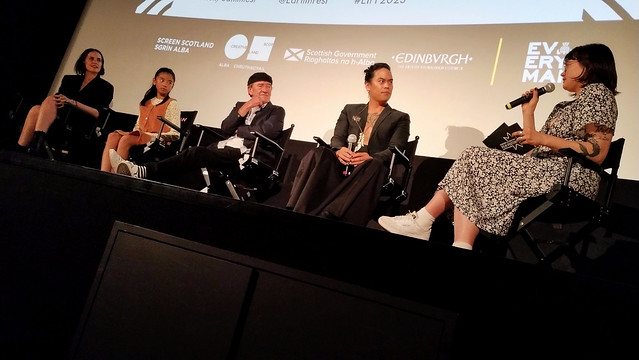
Edinburgh International Film Festival - Raging Grace 04
(Director Paris Zircalla with some of his cast, on stage after the EIFF screening, pic from my Flickr)

This was one of the EIFF screenings I really wanted to catch, and it did not disappoint, with some amazing performances from the small cast (young Jaden stealing many scenes as Grace), and beautifully shot, making the best use of that large, creaking old country home location, mixing horror and drama. The subtexts about past colonialism and echoes in modern day exploitation of immigrants is well done and powerful, and as the director remarked at a Q&A after the screening, much of what was seen on screen is drawn from what many experience in their day to day lives, and it is something that applies not just to the immigrant experience but across society, where those in the poorer-paid jobs are often badly treated and seen as disposable. A brilliant, Gothic-tinged horror-drama with some serious social commentary woven into its structure.

This review was originally penned for Live For Films

STV’s shameless exploitation of photographers on Flickr

On my fairly popular Flickr photo stream I recently received an invite to add some of my photos to a group pool. This is pretty common on Flickr and is part of the idea – themed pools are a place to invite and share images from all over, you get your photos seen by more people and you get to see more people’s different photos than you might otherwise, sometimes becoming friends with some of them. I contribute to a large number of themed pools and it isn’t unusual for me to get an invite to post one of my images to one. This time it was the STV Edinburgh pool, a group pool on Edinburgh life and pics by the Scottish Television media group. However when I looked at their group rules I declined since it said if you added any pics to their pool (bear in mind they invited me to do so), you would:

Grant to STV an irrevocable and perpetual, royalty-free, non-exclusive, world-wide licence to publish your picture on any STV branded service

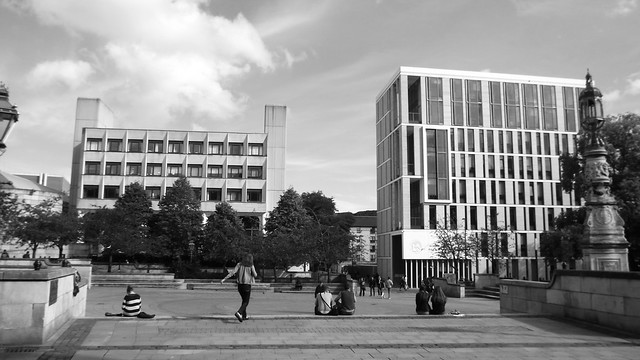
old square, new buildings

I think this is utterly shameless behaviour on the part of a corporate multimedia business – you notice the terms “royalty-free” and “irrevocable”. No mention of compensation if they should decide to use one of your images to illustrate something in any of their media platforms, which are a business. So in other words they get to use your work for nothing to make money for their enterprises. This is blatantly exploiting amateur photographers, and at the same time a sneaky way of doing professional photographers out of work by finding the work of people online then using it for free. Sadly this is not unusual behaviour for many professional old media companies, I’ve seen similar with photos, with written articles and more. They seem to think you should be thankful for ‘the exposure’, the chance to get your work seen. It is a vile and shameless form of exploitation which I find infuriating. I have allowed the use of some of my photos under Creative Commons copyright, free to use with permission and attribution for non-commercial purposes, and have allowed some to be used for various good causes or not for profit art, community and charity purposes. But if a media company – a business – wants to have my images that they can use when they wish (and for all time!) then they can bloody well pay me proper rates for using them. If they are good enough to be used wherever they wish then they are good enough to be paid for. Shame on you, STV, and your disgusting, immoral business practises like this. We are not here to be exploited by you for free material.